Ekoten already generates valuable operational data every day: energy, water, production, laboratory, quality, certification and shipment data. The question is not whether the data exists. The question is whether it can become usable for sustainability decisions.
Factory data often does not live in one system. It may sit across ERP exports, Excel sheets, laboratory reports, meter readings, certificate folders and historical reporting files. This makes sustainability tracking manual, slow and dependent on individual effort.
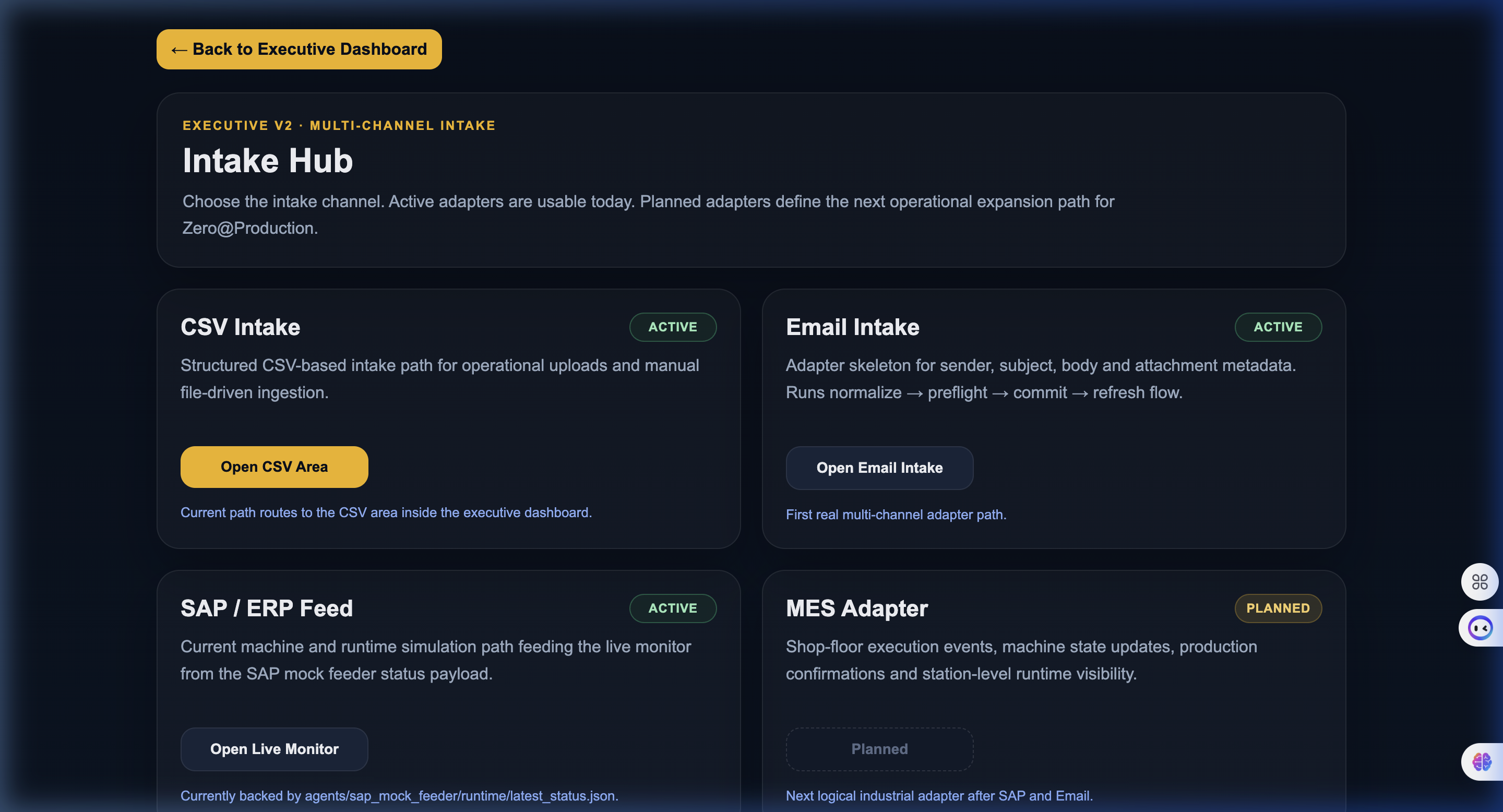
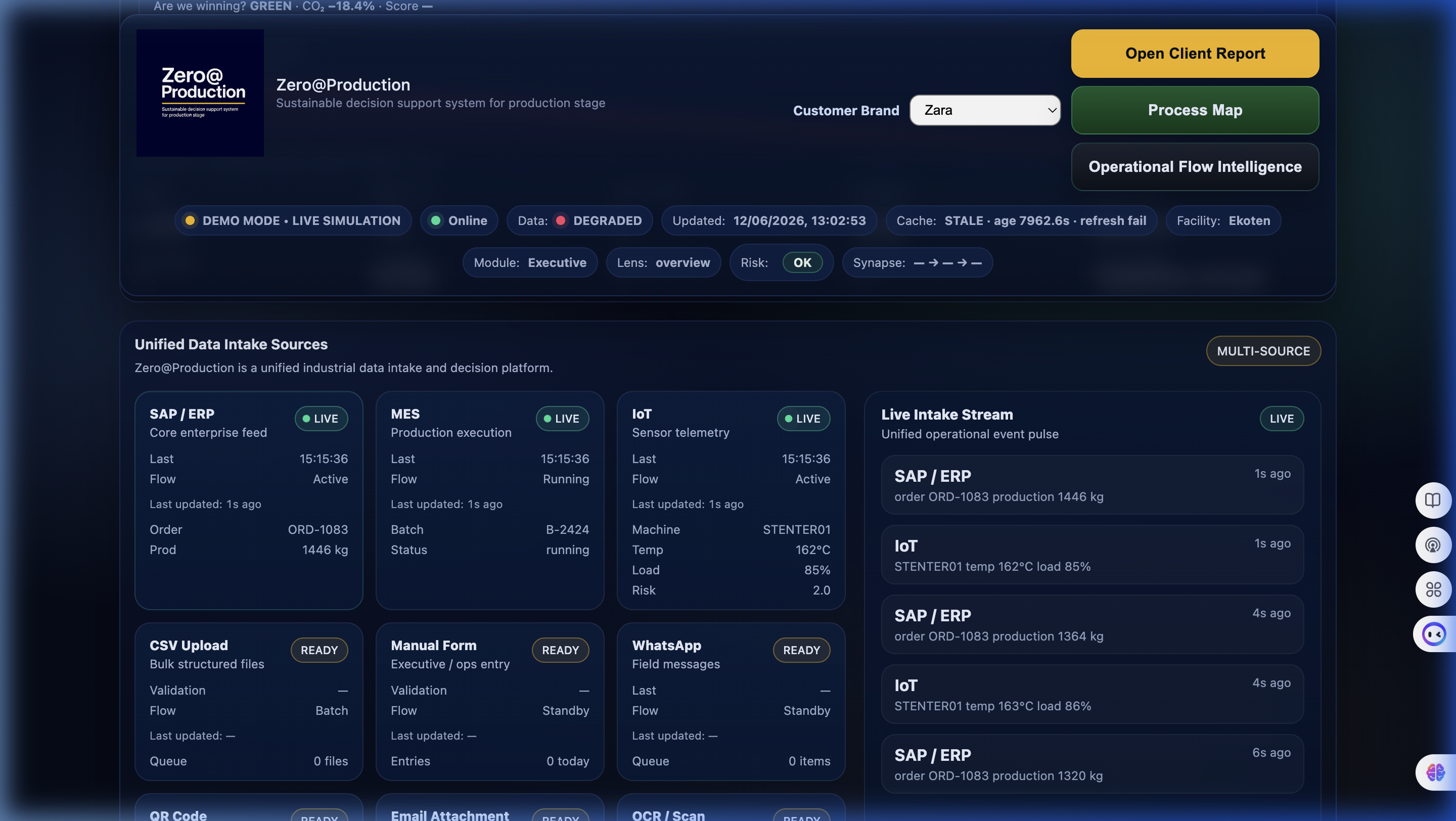
Zero@Production is designed to bring fragmented factory data into one operational intelligence layer. Data can enter through SAP / ERP systems, email, Excel sheets, laboratory reports and future API connections. The goal is not to force the factory to change overnight, but to translate existing data into a shared industrial data language.
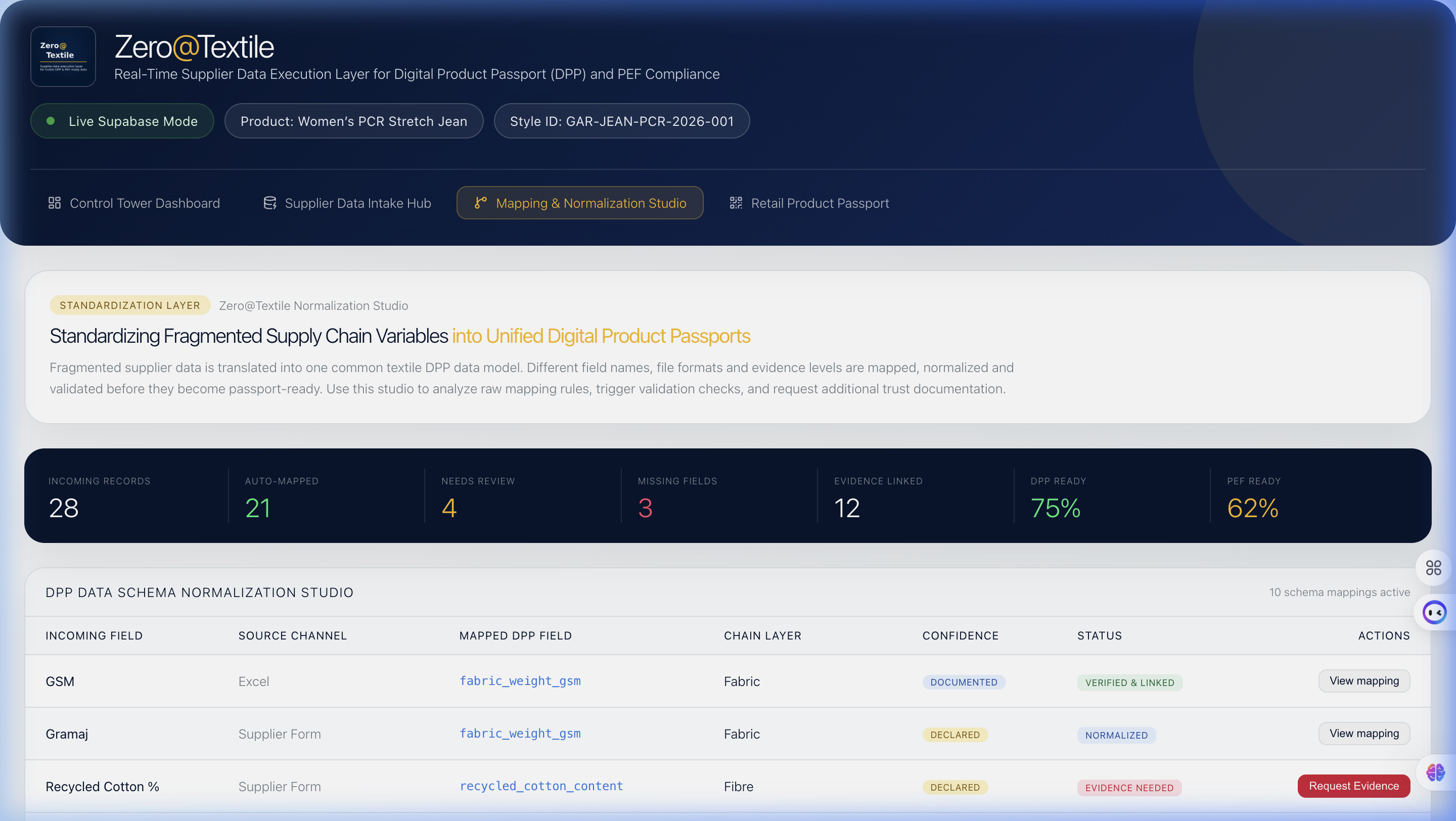
The system highlights missing, inconsistent or weakly evidenced data points. Missing meter logs, expired certificates, inconsistent production volumes or unclear water usage can become visible action items before the reporting deadline.
Structured data can support decision metrics such as energy intensity, water use, waste, carbon data preparation and production efficiency. The purpose is not to produce a final certified footprint inside the demo. The purpose is to provide a stronger data foundation for sustainability teams and future verification workflows.
The pilot success criterion can be practical and measurable. Can we ingest Ekoten’s historical operational data and generate outputs that are comparable with known factory results? If the system can structure around 75–80% of required data fields, identify the remaining gaps clearly and generate usable readiness reports, the pilot can be considered successful.
This creates a common data layer for factory management, sustainability teams, operations and external stakeholders when needed. The aim is not to multiply reports, but to create one traceable and decision-ready view of factory performance.
The proposed Ekoten pilot is simple: use real factory data, structure it, make gaps visible, compare outputs with historical results and measure whether the system creates practical value. If successful, Zero becomes more than a dashboard; it becomes a sustainability decision-support layer for industrial operations.
Zero@Production is not a replacement for Ekoten’s existing systems, auditors or sustainability experts. It is a data execution layer that makes existing factory data more structured, visible and useful for sustainability decisions.
Injest and structure electricity, steam, gas, water, and output datasets.
Highlight missing readings, expired certs, or inconsistent values automatically.
Connect data points directly to verification files, invoices, or certificate pdfs.
Generate reconstructed datasets that can be benchmarked against historical outputs.
Generate readiness data sheets for Ekoten management and sustainability teams.
Ensure zero disruption and smooth compatibility with Ekoten's existing software.